BUICK 1317706 Connecting Rods 60 14NN
fits make: Buick. year: 1941–1990.
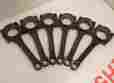
( Manufacturer Part Number: 1317706 ), ( Part Type: Rod )
Review BUICK Series Connecting Rods 60 fits 1941–1990
The product in question is a set of connecting 14NN rods, specifically designed for 1941-1946 Buick models and the 1948 model. This set of rods is a crucial component of your vehicle's engine, responsible for connecting the pistons to the crankshaft.
The rods in this set are made from high-quality materials, ensuring durability and reliability over extended use. They are precision-machined to ensure a perfect fit in your engine, reducing the risk of wear and tear. The rods are also heat-treated to increase their strength and resistance to fatigue, ensuring that they can withstand the high temperatures and pressures generated by your engine.
The set includes 1317706 1942 70 1947 90 connecting rods, which are specifically designed for Buick engines of the specified model years. These rods are 60 inches long, providing the necessary length for optimal engine performance.
Installing these rods is a complex process that should only be undertaken by a professional mechanic or someone with extensive experience in engine repairs. However, the set comes with clear installation instructions to guide you through the process.
In summary, this set of connecting 14NN rods is a high-quality replacement for your worn-out or damaged rods. Made from durable materials and precision-machined to fit your Buick engine, these rods will provide reliable performance and longevity.
Buying (1317706 1942 70 1947 90 connecting 14nn rods 1941 60 1946 buick 1948) comes with its own set of pros and cons.
Pros:1. Authenticity: These are original Buick parts, which means they are designed to fit and function perfectly with your 1948 Buick.
2. Quality: Buick is known for its high-quality parts, and these rods are no exception. They are likely to last a long time, reducing the need for frequent replacements.
3. Fit and Function: As original parts, they will fit perfectly into your car and work seamlessly with the existing system.
Cons:1. Cost: Original parts can be more expensive than aftermarket alternatives. The price tag for these rods may be higher than what you would pay for a new aftermarket set.
2. Availability: Original parts may be harder to find compared to aftermarket alternatives. This could mean a longer wait time if they are not immediately available.
3. Limited Customization: Since these are original parts, they may not offer as many customization options as aftermarket parts.
Conclusion:If you value authenticity, quality, and perfect fit, then buying original parts like these rods for your 1948 Buick could be a worthwhile investment. However, if cost and customization options are more important to you, you may want to consider aftermarket alternatives.
Recommendation:Before making a final decision, I would recommend comparing the prices of both original and aftermarket parts. Consider the long-term costs and benefits of each option, and weigh them against your personal priorities and budget. If you decide to go with original parts, ensure you purchase from a reputable source to ensure the quality of your purchase.
Details:
The failed bearing is not likely to damage the crankshaft. Poured Babbitt bearings are also known to fail gracefully allowing the car to be driven for extended periods of time. Rabbiting is simply the process of applying new Babbitt metal to the connecting rod.
Each rod is genuine gm and is marked with gm forging. Babbitt metal is soft however, its structure is made up of small hard crystals dispersed in a softer metal. Fits the following Buick series 60 century with 248 cubic inch, 100 107hp, inline 8 cylinder engine. Please carefully review my photos and ask questions before buying.
As the bearing wears, the softer metal erodes somewhat, which creates paths for lubricant between the hard high spots that provide the actual bearing surface. Buick series 70 road master with 248 cubic inch, 107 hp, inline 8 cylinder engine Buick series 60 century, series 70 road master series 90 limited connecting rods Buick series 90 limited Babbitt, also called Babbitt metal or bearing metal, is any of several alloys used for the bearing surface in a plain bearing. Babbitt metal is characterized by its resistance to galling and these bearings commonly get over 50,000 miles of use before needing replacement.
part #: 1317706 price
- $240.00
specifications pistonrinro:
- for makes: Buick
- for years: 1941-1990
- mpn: 1317706
- part type: Rod
Seller pistonrinro:
- zipcode: 19446
- city: Lansdale, Pennsylvania
Ratings:
- Great - Highly recommend!!! AAA++++++ 08-03-15
- FAST TO PAY !! GREAT TO DEAL WITH !! WELCOME BACK ANYTIME !! THANKS. 08-24-15
- happy 08-08-15
- Fast delivery. 09-06-15
- B+ seller. the phone back camera came cracked and it doesn't work. 09-06-15
Returns pistonrinro:
- policy: returns accepted
- paid by: Buyer
- time: 14 Days
- type: Money back or exchange buyer's choice
- details: Restocking fee: No
Shipping pistonrinro:
- type: Flat
- cost: $15.0
- handling: 1 days
Payments pistonrinro:
- MOCC
- PayPal
General pistonrinro:
- in stock: Yes
- condition: Remanufactured
- Motors > Parts & Accessories > Vintage Car & Truck Parts > Engines & Components > Pistons, Rings, Rods & Parts
Offer pistonrinro:
- best offer: true
- quantity: 1
- # Sold: 0
- Started: November 17, 2015, 7:12 pm
- # bids: 0
Buick 1317706 Is Similar To:
- 1193362 General Motors Olds Buick Skylark Engine Connecting Rod Gm Oem (45.5% similar) Also, these parts may have been in storage for years and could be dusty, greasy or surface rust, spider webs, etc. It is possible this part fits other vehicles. This a nos part for Oldsmobile F85 and buick skylark with 215 Ci v8 engine is from our huge collection of classic, mostly parts. ...(March 30th, 2019)
- 1266462 Clawson Bals Buick Series Piston Connecting Rod (53.8% similar) Not sure if its a right or left even odd. Barely used. Great part built in the 30'S...(November 5th, 2018)
- 1289138 Buick 1935 1936 Connecting (40.4% similar) Overall, the condition is excellent with very light surface rust, aka shelf wear. Fits the following: 1935 buick series 40 late, 8 cylinder special, please carefully review my photos and ask questions before buying. The rod has been reconditioned by federal mogul and was rabbited. This will not ...(November 27th, 2017)
- 1290560 Buick Century Limited Remanufactured Connecting Rod (44.8% similar) Part LG501 buick seam remanufactured 60 century 90 limited connecting rods by bearing company...(July 2nd, 2019)
- 80 1330610 Part 1937 90 Set Pistion Number Series Buick Ring 60 (36.2% similar) Part #:1330610 prices...(April 21st, 2015)
- 1385362 1968 Buick Skylark 350 V8 Nos Gm Connecting Rod (56.9% similar) This is only a guide line. Please here for more nos gm parts 1 new gm nos connecting rod for 68 Buick's with 350 V8. These are obsolete made in the USA or Canada parts that the dealers no longer stock. Nos does not mean perfect. New genuine gm never used or installed. Some of our nos parts have ...(November 26th, 2016)
- 3565 Std Federal Norris Set Of Nos Rod Bearings Buick Series (29.6% similar) There may be minor cosmetic imperfections. The bearing are standard size. Note: the bearings in federal mogul boxes are McKay-Norris brand part no. Please e-mail any questions at least 48 hours before the sale closes. The applications are:late buick 320 CID 8 Cl. This sale is for: a set of 8 new old...(June 12th, 2018)
- A1317416b Gm Buick Connecting Rod (53.7% similar) 010 it is for a 40 special and 50 super to engine. For sale 1-BUICK 248 connecting rod 1941 to 1947 model's with aluminum pistons only. This rod is for a crankshaft that ground...(January 3rd, 2019)
- A1339643 Buick Connecting Rods 1393912 (51.3% similar) ...(January 28th, 2018)
- 1393817 Buick 1941 42 46 47 48 49 Ser 40 50 Reman Connecting Rod Assy (48.6% similar) Offer is for 6 remain connecting rods. Casting number B1324533B and A1324533B...(December 16th, 2016)
- 25530461 Buick 3.8 Fi Pistons And Rods Std New With Rings 918 413p (32.6% similar) Set of 6 buick v6 rods and pistons, fit fie engines 918 rods. A few nicks and scratches, but nothing to rend any of them as damaged rings and pistons and rods, never installed std bore...(November 4th, 2016)