FORD 1816619C1 Connecting Rod International 6.9 7.3
fits make: Ford. year: 1983-94.
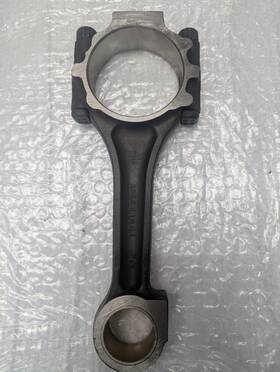
( Manufacturer Part Number: 1816619C1 ), ( Type: Connecting Rod ), ( Vintage Part: Yes )
Review FORD International Connecting Rod 6.9 7.3 1983 94 fits 1983-94
The **Ford 1816619C Connecting Rod** is a high-performance, precision-engineered component designed exclusively for the iconic **7.3L (454 cubic inch) Power Stroke diesel engine** found in Ford trucks from **1983 through 1994**, including models like the F-250, F-350, and F-450 Super Duty. Crafted from **forged 4340 chromium-molybdenum alloy steel**, this rod is built to withstand the extreme stresses of high-torque diesel operation, ensuring durability, reliability, and optimal power delivery. The **1816619C** is a **split-pin style rod**, featuring a **clevis-style small end** that secures the piston with a **split pin and washer**, a design that has stood the test of time for its simplicity and strength. The **large end** is machined to accept the **7.3L engine s forged crankshaft journals**, providing a snug, interference-fit that minimizes lateral movement and reduces wear. This rod is **fully heat-treated and stress-relieved** to enhance fatigue resistance, making it ideal for both stock applications and those seeking to push the limits of their diesel engine with aftermarket upgrades. Whether you're restoring a classic Ford diesel, upgrading for increased power, or replacing worn components, this **OEM-quality connecting rod** ensures a seamless fit and the structural integrity required to handle the demanding workload of a **7.3L Power Stroke**. Its **precision-machined surfaces** and **tight tolerances** guarantee smooth operation, while its **robust construction** delivers the longevity expected from Ford s legendary diesel architecture. For enthusiasts and professionals alike, the **1816619C** is the perfect blend of heritage and performance, ensuring your engine runs with the same reliability it was engineered for nearly four decades ago.
### **Pros and Cons of Buying an International 1816619C1 Ford Connecting Rod (6.9L/7.3L, 1983 1994)**
#### **Pros:**1. **Compatibility with Common Engines** This connecting rod is designed for the **Ford 7.3L (302 cubic inch) and 6.9L (351 cubic inch) V8 engines** found in vehicles like the **F-150, F-250, E-150, and E-350** from 1983 to 1994. It is a direct replacement for stock rods in these engines, ensuring proper fitment without modification.
2. **High-Quality Material** The rod is likely made from **forged steel or high-strength alloy**, which provides durability and resistance to fatigue, especially important in high-performance or heavy-duty applications.
3. **Aftermarket Support** Ford s older V8 engines have a strong aftermarket presence, meaning you ll find **gaskets, bolts, bearings, and other parts** to support your build or repair.
4. **Cost-Effective for Repairs** If your engine has suffered **rod damage (bent, cracked, or worn)**, replacing just the rod (or rods) is often cheaper than a full engine rebuild or replacement.
5. **Potential for Engine Upgrades** If you re modifying your engine (e.g., **big bore, stroker, or forced induction**), this rod may be compatible with **aftermarket upgrades** like **ARP bolts, stronger bearings, or custom crankshafts**.
6. **Easier to Source Than OEM** While OEM rods can be hard to find, this **international part number** suggests it s a widely available aftermarket or remanufactured option, reducing lead times.
7. **Remanufactured Option** Some suppliers offer **reconditioned or rebuilt rods**, which can be more affordable than brand-new ones while still providing reliable performance.
---
#### **Cons:**1. **Age of the Engine** The **1983 1994 Ford V8s** are **older designs** with **weaker stock components** compared to modern engines. If the rod failure was due to **poor maintenance, lack of oil changes, or excessive heat**, the underlying engine may still be at risk.
2. **Potential for Other Engine Issues** A rod failure often indicates **worn bearings, a damaged crankshaft, or excessive end play**. You may need to **inspect and replace other components** (e.g., **main bearings, seals, or the crankshaft**) to prevent future failures.
3. **Fitment Concerns with Modifications** If you ve already modified the engine (e.g., **stroker kit, big bore, or aggressive camshafts**), this **stock-style rod** may not be ideal. Some aftermarket rods are **stronger or lighter**, which could be better for high-RPM or forced induction builds.
4. **Quality Variability** Since this is an **aftermarket or international part**, the quality can vary by supplier. Some rods may be **remanufactured with inconsistent machining**, leading to **premature wear or failure** if not properly inspected.
5. **Installation Complexity** Replacing connecting rods requires **precision assembly**, including **correct bearing clearance, rod bolt torque, and alignment**. Improper installation can lead to **engine damage or failure**.
6. **Limited Warranty** Unlike OEM parts, aftermarket rods may come with **shorter or no warranties**, meaning you bear the risk if they fail prematurely.
7. **Potential for Counterfeit Parts** Due to the **high demand for Ford parts**, there is a risk of **fake or low-quality rods** being sold. Always **buy from reputable suppliers** with proper certifications.
---
### **Conclusion:**Buying an **International 1816619C1 Ford connecting rod (6.9L/7.3L, 1983 1994)** can be a **cost-effective and reliable solution** if you need a **direct replacement for a failed rod** in a stock or lightly modified engine. However, **engine failures often stem from deeper issues**, so a **full inspection of the crankshaft, bearings, and oil system** is essential before installation.
If you're **running a high-performance or heavily modified engine**, consider **aftermarket rods designed for forced induction or high-RPM use** rather than a stock-style replacement. Always **verify the supplier s reputation** and **inspect the rod for defects** before purchase.
---
### **Recommendation:** 1. **If your engine is stock or lightly modified:**- **Proceed with the purchase** from a **trusted aftermarket supplier** (e.g., **ARP, JE, or a reputable Ford parts dealer**).
- **Inspect the rod for cracks, wear, or improper machining** before installation.
- **Replace all related components** (bearings, bolts, seals) for a complete repair.
2. **If your engine is modified or high-performance:**- **Consider aftermarket rods** (e.g., **ARP, JE, or Manley**) designed for **higher stress applications**.
- **Get a full engine inspection** (crankshaft, bearings, oil pump) to prevent future failures.
3. **If you're unsure about quality:**- **Buy from a supplier with a warranty** (e.g., **eBay with seller protection, RockAuto, or a local Ford specialist**).
- **Check for return policies** in case of defects.
4. **For long-term reliability:**- **Consider a full engine rebuild** if the engine has **multiple issues** (e.g., worn bearings, cracked blocks).
- **Upgrade to a modern engine** (e.g., **Power Stroke, Cummins, or a small-block Ford**) if you're running a **heavily modified truck**.
**Final Verdict:** This rod is a **good choice for a straightforward replacement**, but **proper diagnostics and supporting repairs** are crucial for long-term success. If in doubt, consult a **trusted mechanic** before purchasing.
Details:
part #: 1816619c1 price
- $49.00
specifications pistonrinro:
- for makes: Ford
- for years: 1983-94
- mpn: 1816619c1
- type: Connecting Rod
- vintage part: Yes
seller pistonrinro:
- # reviews: 976
- rating: 100.0%
- city: South Elgin, Illinois
general pistonrinro:
- condition: Remanufactured
- Car Truck Parts Accessories > Engines Engine Parts > Connecting Rods Parts
offer pistonrinro:
- sold: 0
- availability: In Stock
- quantity: 1
- options: Ship-to-home
- started: May 22, 2026
payments pistonrinro:
- credit card: Discover
- other
- wallet: Apple-pay
shipping pistonrinro:
- transit: 5-8 Days
- type: Calculated
- class: Standard
- carrier: USPS
- service: USPS Ground Advantage
- cost: $10.95
returns pistonrinro:
- policy: No Returns
Ford 1816619C1 Is Similar To:
- 153 Rods Windsor Connecting Stock Ford Reconditioned Rod (33% similar) Rebuilt by b rods. Pictures in the photo gallery are of exact piece that I am selling. Can use in place of the three casting numbers: C90E, D60E, F2TE. Reconditioned connecting rod for 351W ford v8 in original factory packaging. On my shelf ready to ship...(March 22nd, 2018)
- 1831738c1-1671-1623 Ford Powerstoke Connecting Rods (45.5% similar) 3 power stroke. All components are present: snap rings, compression oil rod bearings still pressed into the connecting rods. 3 power stoke connecting rods w pistons 1831738C1 fully functional tested. Pictures of actual item for each rod and piston combo. Connecting rods w pistons stripped from a ...(July 10th, 2018)
- 1920-1925 Ford Model T Engine Pistons And Connecting Rods A10474 (42.3% similar) Have parts to sell please with details ford model engine pistons, and connecting rods A10474 487 b not sure what year these are for exactly, but they should fit any block from we love to buy parts. Used overall acceptable condition, but missing 3 connecting rod end caps. Watch the video for details...(January 27th, 2016)
- 1g-6200 Ford Nos Truck Cyl Connecting Rod (44% similar) This is ford part number 1g I ship world wide. This is long and in inner diameter. This is a brand new genuine ford nos connecting rod for the series truck with 6 cylinder engine...(July 20th, 2018)
- 21a-6207-a Ford Flathead Connecting Rod Bushings Set Of (43.9% similar) If you do wish to combine shipping please request a revised total before paying Merck Flathead Flatt 4 striker stroke 110 hp horse power con rod mercury...(January 3rd, 2019)
- Bushings Ford Rod-8 21a-6207b Trk Flathead Pass Comm 42-48 Nos Connecting (27.1% similar) Size long USPS 1ST class shipping. These are 21A 6207B, eight 8 connecting rod bushings for eight used on pass hp 8CYL comm, trucks hp 8 Cl and four used on comm. Many still have the formic or ford labels on them or parts bin cards with them or in the original boxes.made in the USA, not the inferior...(March 26th, 2015)
- 300-20 Globe Vintage Nos Ford Model Connecting Rods Remanufactured (40% similar) One out of box. Nos globe remanufactured rabbited model a connecting rods 3 in original box. Need to be cleaned up and ready go. Part been sitting on shelf for years...(March 29th, 2019)
- 48-6211-a-3 Ford Vintage V8 Connecting Rod (47.5% similar) You are viewing high-contrast images and even minor flaws may appear pronounced unsightly. Item details you are buying on a ford v8 connecting rod bearing in original box, appears unused part A-3EACH bearing measures approx. Due to lighting issues, colors sometimes may be slightly off. You are ...(February 24th, 2017)
- 52-6200 Fomoco Ford Original Connecting (36.7% similar) These look like they're in very good shape, the pistons will need to be replaced. Ready for you to restore. For sale is a set of 8 original V8-60 connecting rods and pistons. Happy motoring...(September 18th, 2017)
- 52-6207-a Fomoco Ford Connecting Rod Piston (45.1% similar) See pictures for more details long. Flathead V8-60 hp engine. This is for one set of eight 8 connecting rod piston pin bushings a ford passenger, pickup, and truck with 136 cu. They measure. These bushings are marked ford script USA...(February 9th, 2017)
- 5355ca-.010 Ohio Piston Pin Ford Flathead Hp Connecting Rod Bearings Pair (39.4% similar) Never used and in excellent condition. Rod bearing, set of 4 pairs for hp 239 cu in. Ford or mercury motor with crank rod diameter...(September 19th, 2018)