HYUNDAI 23513-25040 Engine Connecting Rod Bolt G4KJ
fits make: Kia, Hyundai. year: 2013–2022.
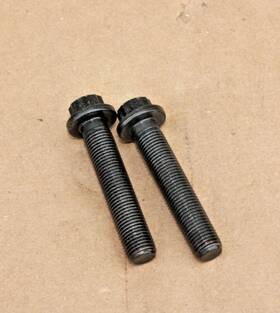
( Brand: Hyundai ), ( Manufacturer Part Number: 23513-25040 ), ( Part Type: Engine Rod Bolt )
Review HYUNDAI Oem Kia Engine Connecting Rod Bolt fits 2013–2022
The **Hyundai 23513-25040 engine connecting rod bolt** is a precision-engineered fastener designed exclusively for the **2.4L Gamma (G4JK) four-cylinder engine** found in select Hyundai and Kia models spanning the years **2013 through 2022**. These bolts are critical components of the engine s internal structure, playing a pivotal role in maintaining the integrity of the crankshaft assembly by securely fastening the connecting rods to the crankshaft journals. Crafted from high-strength **alloy steel**, these bolts are heat-treated to achieve an optimal balance of tensile strength and durability, ensuring they can withstand the extreme forces generated during high-performance operation, rapid acceleration, and prolonged engine use. Each bolt features a **fine-thread design** and a **hex head** with a **12-point drive**, allowing for precise torque application to prevent overtightening or loosening under vibration. The **OEM-grade quality** of these bolts ensures they meet Hyundai s stringent manufacturing standards, reducing the risk of catastrophic engine failure such as rod knock or crankshaft damage often caused by inferior aftermarket replacements. Available in a **black oxide finish**, these bolts resist corrosion and wear, making them ideal for both high-mileage vehicles and those subjected to harsh driving conditions. Whether replacing a worn bolt, addressing a maintenance recall, or upgrading for enhanced reliability, these **direct-fit, genuine Hyundai/Kia parts** provide the confidence of original equipment performance, ensuring your engine operates with the same precision and longevity as it did from the factory. Always follow the manufacturer s specified torque specifications typically around **60-70 ft-lbs** to guarantee optimal clamping force without risking deformation or thread stripping.
**Pros and Cons of buying a Hyundai 23513-25040 (Kia G4KJ Engine Connecting Rod Bolt) for a 2013 2022 Vehicle**
### **Pros:**1. **OEM Quality and Fit** This part is an original equipment manufacturer (OEM) bolt, meaning it is designed to match the exact specifications of the engine s manufacturer. This ensures proper fit, torque requirements, and compatibility with the rest of the engine components, reducing the risk of misalignment or failure.
2. **Reliability and Durability** Hyundai and Kia use high-quality materials for their OEM bolts, which are engineered to withstand the stress of engine operation. Properly installed, these bolts should last the lifetime of the engine without premature wear or failure.
3. **Warranty Coverage** If purchased directly from an authorized Hyundai/Kia dealer or a reputable aftermarket supplier with a warranty, you may receive coverage against defects. This provides peace of mind in case of manufacturing issues.
4. **Prevents Engine Damage** Connecting rod bolts are critical for maintaining engine integrity. Using a genuine or high-quality aftermarket bolt prevents catastrophic failure (e.g., rod snapping, piston damage) that could lead to expensive engine repairs.
5. **Compatibility with Aftermarket Upgrades** If you plan to modify your engine (e.g., forced induction, high-performance tuning), OEM bolts are often a safer starting point before transitioning to aftermarket options designed for increased stress.
6. **Ease of Installation** Since these bolts are standard for the G4KJ engine, they are widely available, and installation is straightforward if you have basic mechanical skills or access to a mechanic.
---
### **Cons:**1. **Cost** OEM bolts are typically more expensive than aftermarket alternatives. While the price difference per bolt is minimal, purchasing a full set (especially if multiple bolts are needed) can add up. For example, a set of four connecting rod bolts may cost $50 $100 or more, depending on the source.
2. **Limited Availability Outside Dealerships** While not impossible, finding these bolts outside authorized dealers or specialized auto parts stores (e.g., RockAuto, Dorman, or local Hyundai/Kia parts centers) can be challenging. Some aftermarket suppliers may not stock them, requiring extra effort to source.
3. **Potential for Counterfeit Parts** If purchasing online from untrusted sellers, there is a risk of receiving counterfeit or substandard bolts. These may fail prematurely or not meet the required torque specifications, leading to engine damage. Always buy from verified sellers with return policies.
4. **Overkill for Minor Repairs** If the bolts are only being replaced due to routine maintenance (e.g., during an oil change or minor engine service) and are not showing signs of wear, OEM bolts may be unnecessary. In such cases, high-quality aftermarket bolts (e.g., from ARP, Fel-Pro, or Mucoff) could be a cost-effective alternative.
5. **Torque Specifications Must Be Followed Precisely** Connecting rod bolts require specific torque settings (often in a two-step process: initial torque followed by angle tightening). Over-tightening or under-tightening can compromise engine performance or cause bolt failure. This requires careful attention during installation.
6. **Time-Consuming Replacement** Replacing connecting rod bolts typically requires removing the engine from the vehicle or at least the cylinder head, which is a labor-intensive process. This may necessitate professional help, adding to the overall cost.
---
### **Conclusion:**The Hyundai 23513-25040 connecting rod bolt is a high-quality, reliable component that is ideal for **critical engine repairs, rebuilds, or when replacing worn or damaged bolts**. Its OEM status ensures compatibility and peace of mind, especially in high-stress applications. However, the cost and availability limitations may make it less practical for routine maintenance or minor replacements where aftermarket alternatives suffice.
For most drivers, **purchasing OEM bolts is justified when:**- The bolts are visibly damaged or stretched.
- You are performing a full engine rebuild or major overhaul.
- You want to ensure long-term reliability without compromising on quality.
- You have access to a trusted supplier (e.g., dealer, reputable online retailer).
For less critical scenarios (e.g., preventive replacement during a service), **high-quality aftermarket bolts** (e.g., ARP or Mucoff) can offer a balance of cost and performance. Always verify the bolt s specifications (grade, material, thread pitch) to ensure compatibility with your engine.
---
### **Recommendation:** 1. **If the bolts are failing or damaged:**- Buy the **OEM Hyundai 23513-25040 bolt** from an authorized dealer or a trusted online retailer (e.g., RockAuto, Dorman, or Hyundai s official parts site). Avoid generic "universal" bolts unless they meet the exact specifications.
- Follow the **engine manufacturer s torque specifications** (typically 80 100 ft-lbs in two steps: initial torque angle tightening). Consult your vehicle s service manual or the bolt s packaging for exact values.
- Consider replacing **all bolts in a set** (even if only one appears loose) to prevent uneven stress.
2. **If replacing as a precautionary measure:**- Evaluate whether aftermarket bolts (e.g., **ARP 900-1000 series** or **Fel-Pro 2000 series**) are sufficient for your engine s condition. These brands offer high-quality alternatives at a lower cost.
- If your engine is heavily modified (e.g., forced induction, high RPM), research **aftermarket high-performance bolts** designed for increased stress.
3. **Where to Buy:**- **Authorized Dealers:** Most reliable but may be pricier.
- **Online Retailers:** RockAuto, Dorman, Mopar, or Hyundai s parts website (ensure the seller has good reviews and a return policy).
- **Local Auto Parts Stores:** Check for Hyundai/Kia-specific sections or ask for OEM parts by part number.
4. **Installation:**- If you lack experience, **have a mechanic perform the replacement**, especially if the engine is still under warranty (some warranties void if aftermarket parts are used).
- Document the process (take photos or videos) in case of future reference or warranty claims.
5. **Final Note:**- Connecting rod bolts are **not a part to skimp on**. A failure here can lead to **thousands of dollars in engine damage**. Prioritize quality over cost when dealing with critical engine components.
Details:
2020 Kia Serenity L, LX 2.4L L4 - Gas. Unless stated otherwise It may be a little dusty from storage use. Please be 100% sure this is the correct part for your vehicle. 2021 Kia Stinger GT-Line 2.0L L4 - Gas.
For sale is an used OEM part original equipment manufacturer that came stock with your car, it not aftermarket. 2020 Kia Optima LX,, SX, Special Edition 2.0L L4 - Gas, 2.4L Gas.
part #: 2351325040 prices
- $195.99-$288.99
specifications pistonrinro:
- for makes: Kia, Hyundai
- for years: 2013-2022
- brand: Hyundai
- mpn: 23513-25040
- part type: Engine Rod Bolt
offer pistonrinro:
- options: Ship-to-home
- sold: 0
- quantity: 2
- best offers: True
- started: February 28, 2026
- availability: In Stock
seller pistonrinro:
- # reviews: 2892
- city: Rancho Cordova, California
- rating: 98.4%
returns pistonrinro:
- time: 30 Days
- paid by: Buyer
- policy: Returns Accepted
shipping pistonrinro:
- cost: $5.00
- class: Standard
- transit: 4-9 Days
- service: USPS Ground Advantage
- type: Fixed
- carrier: USPS
general pistonrinro:
- Car Truck Parts Accessories > Engines Engine Parts > Connecting Rods Parts
- condition: Used
payments pistonrinro:
- credit card: Visa
- cash
- other
- wallet: Paypal
Hyundai 23513-25040 Is Similar To:
- Carbole 23111-2g200 23111-2g230 231112g200 231112g230 Engine Crankshaft Rods Bearing Kit Fits 2006-2017 2018 2019 Hyundai Sonata 2.4l (32.7% similar) Kia 231112G200. Condition: brand new. Main rod bearing kit oe#. For kia Sportage 2.4L 2012 - 2019 . Easy to install, direct replace. 231112G230 23111 2G200 72RZ62GF00. However in a pump, the crankshafts motion causes piston to move back and forth.the crankshaft is connected pistons by crank pins ...(August 4th, 2023)
- Sparkwhiz 2351025220 2351025230 2351025210 23510-25240 4pc Connecting Rod For 2011-2020 Kia Sorento Optima Sportage Hyundai Sonata 2.4l (32.4% similar) Fitment: for 2014 -2020 kia serenity 4-DOOR 2.4L. This includes packaging, inserts, manuals etc. For 2014 -2019 kia Sportage 4-DOOR 2.4L. 23510-2G541, 23510-2G552. For 2011 -2018 kia optima 4-DOOR 2.4L. Brand new and high quality. For 2014 -2019 Hyundai Tucson 4-DOOR 2.4L. 4PC connecting rod for...(August 14th, 2023)
- Autostorefocus 235102g440 Connecting Rod For 12-16 Hyundai Kia Genesis Coupe Sonata Optima 23510-2g440 (31.6% similar) Packing list as pictured, 1XCONNECTING rod pictured , as shown in the first picture. Do not open the return or case directly. Please compare the part number with your original one before purchasing...(August 17th, 2023)
- Kingdarn C293-a007 4x Connecting Rod Piston Kit For Hyundai Sonata Sorento Optima 2.4l 11-19 F13 (26.7% similar) How to return. Connecting rod 23510-2G440 fit Hyundai genesis Santa Fe kia optima 2.0L 12-16. 2.I am here and ready to assist you with any questions or concerns might have before after the purchase. 4x connecting rod piston kit for Hyundai sonata serenity optima 2.4L 11-19 F13. 4PCS connecting rod ...(August 17th, 2023)
- Hyundai 23510-2t010 Genuine Connecting Rod (68.5% similar) Electrical parts are not returnable...(August 18th, 2023)
- Maxpeedingrods 548ja0 Forged H-beam Connecting Rods Arp Bolts For Hyundai 1.6 Gamma T-gdi G4fj 130.8mm (29.2% similar) All big and small ends are finished with sunken honing machine, precision alignment sleeves positively locate the rod cap, maintaining end bore size eliminating cap walk, -100% x-rated, sonic tested , -multi-stage heat treated, shot preened to relieve stress, come bronzed bushing suitable for ...(September 2nd, 2023)
- Carbole 23510-2b700 1.6l Turbo Engine Connecting Rod 235102b700 For Hyundai Veloster Kia Forte Soul (46.4% similar) Easy and direct replacement. 1.6L turbo engine connecting rod 235102B700 for Hyundai bolster kia forte soul, features: 100% brand new and high quality. Great replacement for your old one. We'll do the same for you as well. Oe part number: 23510-2B700. Excellent delivery. Part number: 23510-2B700 ...(September 19th, 2023)
- Sinocmp 2351025010 4x Connecting Rod Fit For 11-13 Hyundai Tucson 10-13 Kia Forte 2.0l 23510-25030 (34.7% similar) 4 connecting rods as pictures. 4PCS connecting rod for 11-13 Tucson 10-13 forte 2.0L 23510-25030...(September 26th, 2023)
- Carbole 23041 2e210 4x Connecting Rod Piston And Rings Kit Fits 2.0l Kia Forte Forte5 Hyundai Tucson (30.8% similar) Global transportation. Take photos and note damages. New list item. 4x connecting rod piston rings kit fits 2.0L kia forte FORTE5 Hyundai Tucson, Tucson. Package included. Fitments: big-auto parts. Connecting rod part number: 23510-2E001, 235102E001, 23510 2E001,235102E001, 23510-2E410, 235102E410. ...(September 26th, 2023)
- Kingdarn 23040-2g510 Engine Piston And Pin Snap Ring Kit For Hyundai Sonata Kia Optima 2.4l 11-19 F13 (32.9% similar) 4PCS connecting rod 23510-2E001 for 12-19 kia soul 13-18 Hyundai Tucson 2.0L F13. 2.I am here and ready to assist you with any questions or concerns might have before after the purchase. Engine piston pin snap ring kit for Hyundai sonata kia optima 2.4L 11-19 F13. How to return. 4x connecting rod ...(October 17th, 2023)
- Oem 235102e101 Piston Rings Connecting Rod With Bearings Fits 12-16 Hyundai Kia 1.8l Nb80 (38% similar) Unless stated otherwise it may be a little dusty from storage use. For sale is an used oem part original equipment manufacturer that came stock with your car, it not aftermarket. Fits: 2012 -16 Hyundai Elnora 1.8 / 2014 -16 kia forte...(October 18th, 2023)