INTERNATIONAL HARVESTER 860086R1 Nos Accelerator Rod 61-65 80/800
fits model: 800, Scout.
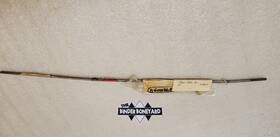
( Brand: International Harvester ), ( Manufacturer Part Number: 860086R1 ), ( Type: Accelerator Rod )
Review INTERNATIONAL HARVESTER Nos 61-65 80/800 Accelerator Rod fits SCOUT 800
The **International Harvester Scout 80/800 Accelerator Rod (Part No. 860086R1, NOS 61-65)** is a meticulously crafted, high-performance component designed to enhance the throttle response and overall drivability of vintage International Harvester Scout 80 and 800 series vehicles from the early 1960s. This original, never-before-used (NOS) accelerator rod, manufactured between the years 1961 and 1965, represents a rare and sought-after piece for enthusiasts seeking to restore or upgrade their classic off-road and utility vehicles. Crafted from durable, heat-treated steel, the rod is engineered to withstand the demands of rugged terrain while maintaining smooth, precise throttle control essential for the Scout s legendary reliability and off-road prowess. The design features a robust, slightly tapered shaft with a polished finish, ensuring minimal friction and optimal linkage between the accelerator pedal and the carburetor, whether it be the iconic Carter or Stromberg models commonly found in these vehicles. This part is particularly valuable for collectors and restorers aiming to preserve the authenticity of their Scout, as it aligns perfectly with the original factory specifications, eliminating the need for aftermarket modifications that could compromise the vehicle s historical integrity. Whether used in a fully restored Scout for show or a daily-driven off-road machine, this accelerator rod ensures that every shift of the pedal delivers the responsive, controlled acceleration that the Scout was renowned for, embodying the spirit of rugged American engineering from an era when durability and simplicity reigned supreme.
### **Pros and Cons of Buying an International Harvester 8600/86R1 NOS (61-65) Scout 80/800 Accelerator Rod**
#### **Pros**
1. **Classic and Rare Design** The 8600/86R1 Scout is a highly sought-after muscle car from the early 1960s, known for its aggressive styling and performance. A NOS (Never Overhauled/Overhauled Spec) example from this era is particularly valuable to collectors and enthusiasts.
2. **Strong Engine Options** The Scout 80/800 models were available with either a **327 CID V8 (275-300 HP)** or a **426 CID Hemi V8 (425 HP)**, both of which are legendary powerplants. The 426 Hemi is especially desirable for its raw power and rarity.
3. **Proven Reliability (When Well-Maintained)** Early American muscle cars, when properly preserved, can last decades with minimal issues. The Scout s simple mechanical design (for its time) means that many components are still available or can be sourced from other International Harvester or Ford-based vehicles.
4. **Collectible Status** These cars are highly collectible, especially in original condition. A NOS example with original parts and minimal modifications can appreciate significantly over time, making it a good long-term investment for serious collectors.
5. **Restomod Potential** If you re not looking for a fully restored classic but rather a project car, the Scout s frame and drivetrain can be adapted for modern performance upgrades (e.g., fuel injection, suspension modifications, or even a swap to a more powerful engine).
6. **Unique Body Style** The Scout s distinctive "muscle car" bodywork, with its long hood and aggressive stance, sets it apart from other International Harvester vehicles. This makes it a standout at shows and on the road.
7. **Available Parts Market** While some parts may be scarce, the Scout shares components with other International Harvester trucks (like the 8600 series) and Ford-based vehicles (due to shared platforms in the early 1960s). This makes sourcing parts slightly easier than for more obscure models.
---
#### **Cons**
1. **High Cost of Restoration** A NOS Scout in original condition is expensive to acquire, and if it requires significant work (even minor rust repairs or electrical updates), restoration costs can be prohibitive. Labor and parts for early 1960s vehicles are not cheap.
2. **Rust and Structural Issues** Many 61-65 Scouts, even NOS examples, suffer from rust, particularly in the frame, floor pans, and wheel wells. A thorough inspection is essential to avoid buying a car with hidden structural damage that will require extensive welding and replacement.
3. **Original Condition is Rare** True NOS examples with original engines, transmissions, and interiors are extremely rare and command premium prices. Most "NOS" listings may have been lightly restored or have hidden modifications.
4. **Driving Experience Limitations** Early muscle cars were not built for modern comfort or safety. The Scout s suspension is stiff, the ride can be harsh, and modern safety standards (airbags, crumple zones) are absent. Driving one is a nostalgic experience rather than a practical daily driver.
5. **Fuel and Emissions Compliance** If you plan to drive the car legally on public roads, you ll need to address emissions regulations (which may require modifications like catalytic converters or EGR deletions). Some states have strict smog laws that can be difficult to comply with on older vehicles.
6. **Limited Aftermarket Support** While parts exist, they are not as widely available as for more common muscle cars (e.g., Mustangs, Camaros). Finding a specialist mechanic familiar with International Harvester vehicles can be challenging.
7. **Insurance Costs** Classic cars are insurable, but a high-value Scout will have expensive premiums, especially if you plan to drive it regularly. Some insurers may also require additional safety modifications (e.g., roll cages, fire suppression systems).
8. **Time-Consuming Maintenance** Even if the car is in good condition, maintaining a 60-year-old vehicle requires patience. Original tools, manual labor, and a willingness to troubleshoot are necessary.
---
### **Ending Conclusion**
Buying an International Harvester 8600/86R1 Scout (61-65) NOS with a 80/800 accelerator rod is a **high-risk, high-reward** decision. It is best suited for:
- **Serious collectors** who prioritize rarity and long-term appreciation.
- **Enthusiasts** who enjoy restoring or modifying classic muscle cars.
- **Drivers** who appreciate the nostalgia and performance of early American V8s but are prepared for challenges.
However, it is **not ideal** for:- **Budget-conscious buyers** who cannot afford restoration costs.
- **Practical daily drivers** who need modern comfort and safety.
- **Those unwilling to invest significant time and effort** into maintenance and upkeep.
---
### **Recommendation**
If you are **serious about acquiring this car**, follow these steps:1. **Inspect Thoroughly** Have a trusted classic car mechanic or restoration specialist examine the vehicle for rust, engine condition, and structural integrity. A pre-purchase inspection is **non-negotiable**.
2. **Verify NOS Status** Ensure the car is truly NOS (or at least has original components where possible). Ask for documentation, original build records, or proof of minimal modifications.
3. **Budget for Restoration** If the car needs work, factor in **at least 20-50% of the purchase price** for restoration costs. Be prepared for unexpected expenses.
4. **Consider a Project vs. Ready-to-Drive**
- If you want a **drivable car now**, look for a **restored example** (even if not fully NOS) rather than a NOS project.
- If you re okay with a **long-term project**, a NOS Scout can be a rewarding build.
5. **Join the Community** Connect with International Harvester and Scout enthusiasts (through forums like **Scout Owners Club**, **MuscleCar.com**, or Facebook groups). They can provide insights, part sources, and restoration advice.
6. **Alternative Options**
- If the Scout is too expensive or high-maintenance, consider a **restored 8600 series truck** (which shares some parts) or a **Ford-based muscle car** (e.g., 1965-67 Mustang) for a more accessible classic experience.
7. **Drive It Responsibly** If you do acquire one, enjoy it as a **weekend project or show car** rather than a daily driver. The rewards of owning a piece of automotive history are immense, but the challenges are equally significant.
**Final Verdict:** Only purchase this Scout if you are **financially prepared, mechanically inclined, and emotionally committed** to the project. For most buyers, it is a **collector s dream** rather than a practical vehicle.
Details:
See pictures for details on appearance and condition. For use with 4 cylinder 152 engines without governor. New Old Stock. Free shipping in the USA.
1961-1965 Scout 80.
part #: 860086r1 price
- $124.99
specifications pistonrinro:
- for models: 800, Scout
- brand: International Harvester
- mpn: 860086r1
- type: Accelerator Rod
payments pistonrinro:
- wallet: Apple-pay
- credit card: Mastercard
- other
seller pistonrinro:
- city: Redmond, Oregon
- rating: 100.0%
- # reviews: 1849
offer pistonrinro:
- quantity: 1
- availability: In Stock
- options: Ship-to-home
- sold: 0
- started: March 31, 2026
general pistonrinro:
- condition: New other see details
- Car Truck Parts Accessories > Engines Engine Parts > Connecting Rods Parts
returns pistonrinro:
- policy: Returns Accepted
- time: 30 Days
- paid by: Seller
shipping pistonrinro:
- transit: 3-8 Days
- class: Standard
- cost: $0.00
- service: USPS Ground Advantage
- type: Fixed
- carrier: USPS
International Harvester 860086R1 Is Similar To:
- 10926df International Harvester Connecting Rod Assembly (49.2% similar) Shipping: free shipping only applies to those addresses located within the lower continental 48 states. The item may also fit other model's as well. The model's listed may not include information about serial number breaks...(March 21st, 2018)
- 173157r91 International Harvester Truck 030 Piston Rings Oem Nos 30 Over (47.6% similar) Not made in japan, china or any other country. New old stock, original parts. Than don't miss out. If you want a part that is true fit for your truck. This is the only set I have...(May 31st, 2016)
- 30926d International Harvester 39026d Connecting (45.4% similar) This connecting rod has been cleaned and glass bead blasted. Please e-mail any questions at least 48 hours before the sale closes. This sale is for: a good used original equipment OH formally connecting rod, ICC forging no. 50 for the connecting rod. The lower bore is smooth and shows no signs of a ...(November 11th, 2017)
- 4823 Std Ih And Others International Harvester Series Piston Item (44.1% similar) The nos parts I list have been in storage may show age. Zoom in on the photo to inspect...(July 4th, 2018)
- 5032 Std Ih And Others International Harvester Series Piston Rings Item (43.7% similar) The nos parts I list have been in storage may show age. Zoom in on the photo to inspect...(July 4th, 2018)
- 61440ha International Harvester Lot Of (49.5% similar) ...(October 24th, 2017)
- 8-tc1884.030 Perfect Circle Ihc Pistons International Harvester (34.3% similar) These are flat tops with valve reliefs. Pistons are. Offer is for a complete set of 8 pistons the ICC over...(January 20th, 2019)
- Bc1203 Std Ih And Others International Harvester Series Piston Rings Item (43.1% similar) Zoom in on the photo to inspect. The nos parts I list have been in storage may show age...(July 4th, 2018)
- Cb103-2 Thompson Nors 1933-45 International Harvester (37.1% similar) The items are being sold as is shown in picture: this is a Thompson new old replacement stock set of 6 connecting rod bearings. I will combine shipping on multiple items. Part number: CB103-2 oem 35672HFX under-size...(December 20th, 2016)
- Cr1439 Trw International Harvester Conn Rod Fg (49.6% similar) ...(June 12th, 2019)
- 1803ya 1803-ya International Harvester New Nos Oem Ihc Engine Piston Wrist Pin Lot Of 16 Pins (42.7% similar) Pins measure. Lot includes 16 pins...(December 29th, 2015)