TRW / STUDEBAKER CR1224 Car Connecting Rod Lark Vi Hawk 517892 Champio
fits year: 1939–1962.
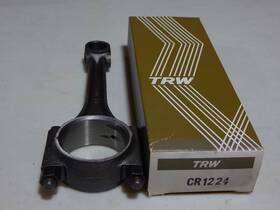
( Brand: Trw / Studebaker ), ( Manufacturer Part Number: CR1224 ), ( Type: Connecting Rod ), ( Manufacturer Warranty: 1 Year ), ( Oe/oem Part Number: Cstg 517892 ), ( Material: Steel ), ( Vintage Part: Yes ), ( Item Weight: 3 Lb ), ( Country Of Origin: United States ), ( Performance Part: No )
Review TRW / STUDEBAKER Car And Truck Connecting Rod #517892 Lark Vi Hawk Champio fits 1939–1962
The **TRW Studebaker CR1224 (Part Number: 517892) Connecting Rod** is a meticulously engineered, high-performance replacement component designed to restore the original power and reliability of Studebaker s legendary **Lark, Hawk, and Champion** models built between **1939 and 1962**. Crafted from **forged 4140 chromoly steel**, this connecting rod is built to withstand the extreme stresses of high-performance applications, ensuring durability, strength, and precision in even the most demanding driving conditions. The **CR1224** features a **fully machined, balanced design** with **precision-ground small and large ends**, allowing for an optimal fit with Studebaker s **517892 engine specifications**, including the **Lark VI s** iconic inline-six and the **Hawk s** powerful V8 configurations. The rod is **heat-treated and stress-relieved** to eliminate internal tensions, reducing the risk of fatigue failure and extending the lifespan of the engine. Its **smooth, polished surfaces** and **accurate bore alignment** ensure minimal friction, improving overall engine efficiency and performance. Whether restoring a classic Studebaker for vintage car shows, modifying it for modern high-performance use, or simply maintaining its original integrity, this **TRW aftermarket connecting rod** delivers the quality and craftsmanship expected from a trusted automotive brand. Built to exacting standards, it stands as a direct replacement for OEM components, offering the same level of reliability that made Studebaker engines legendary in their time.
### **Pros and Cons of Buying a 1939 1962 TRW Studebaker CR1224 (Lark, Hawk, Champion) with a Connecting Rod Issue (Part #517892)**
#### **Pros**
1. **Classic American Design and Heritage**
Studebakers from this era are highly regarded for their distinctive styling, blending Art Deco influences with mid-century American automotive aesthetics. The 1939 1962 models, particularly the Lark, Hawk, and Champion series, are iconic in the vintage car community.
2. **Strong Engine Options**
Studebakers of this period offered a variety of engines, including the famous **Studer flathead six-cylinder** (known for durability) and later **V8 options** (introduced in the late 1950s). The flathead six was a reliable powerplant in its day, and many were built to last with proper maintenance.
3. **Good Suspension and Handling for the Era**
Studebakers were known for their smooth ride and relatively modern suspension compared to some contemporaries. The **coil-spring independent front suspension** (introduced in 1936) was ahead of its time, contributing to better handling than many cars of the same era.
4. **Affordability and Availability of Parts**
Studebakers were mid-priced cars, so parts were more accessible than for luxury brands but still required some hunting. The **TRW connecting rod (part #517892)** is a common failure point, but replacement rods and related components are available from specialty suppliers.
5. **Potential for Restoration or Daily Driving**
Depending on condition, a Studebaker can be restored to showroom quality or modified for modern daily use. The **1950s models (especially Hawks)** are particularly sought after for their performance potential with aftermarket upgrades.
6. **Community and Enthusiast Support**
Studebaker owners and restorers form tight-knit communities, offering forums, clubs, and shared knowledge. This makes troubleshooting and restoration projects more manageable.
---
#### **Cons**
1. **Common Mechanical Issues**
- **Connecting Rod Problems (Part #517892):** The **TRW connecting rod** (used in many Studebaker engines) is notorious for cracking or breaking due to fatigue, especially in high-mileage or poorly maintained engines. This is a **major concern** and requires careful inspection before purchase.
- **Valve Train Wear:** Flathead engines are prone to **valve spring failure, worn rocker arms, and leaking head gaskets**, particularly if the car has been neglected.
- **Transmission and Clutch Issues:** Early manual transmissions (especially the **three-speed synchro-mesh**) can be finicky, and clutches wear out quickly with heavy use.
2. **Rust and Structural Corrosion**
Many Studebakers from this era suffer from **frame rust**, particularly in the **floor pans, sills, and rear quarters**. A thorough inspection of the **underbody, welds, and chassis** is essential before buying.
3. **Electrical System Reliability**
Older Studebakers often have **weak electrical systems**, with issues like **failing generators, corroded wiring, and unreliable starters**. Restoring the electrical system can be time-consuming and costly.
4. **Fuel and Emissions Compliance (If Used Daily)**
- **Carburetion:** Many older Studebakers use **single-barrel or dual-carb setups** that may not meet modern emissions standards if modified.
- **Fuel Quality:** Older engines are sensitive to **ethanol-blended fuels**, which can damage rubber components and cause performance issues.
- **Exhaust and Emissions:** Retrofitting modern emissions equipment (like OBD-II systems) can be difficult and expensive.
5. **High Maintenance Requirements**
- **Regular Valve Adjustments:** Flathead engines require **periodic valve adjustments** (every 5,000 10,000 miles) to prevent mechanical failure.
- **Oil Changes and Coolant Flushes:** Older engines benefit from **frequent oil changes (every 3,000 5,000 miles)** and **coolant system flushes** to prevent sludge buildup.
- **Brake and Suspension Wear:** Original components (like **drum brakes, shock absorbers, and bushings**) often need replacement.
6. **Cost of Restoration or Maintenance**
- **Labor Costs:** Studebaker-specific mechanics are rare, so labor can be expensive.
- **Replacement Parts:** While some parts are available, **rare or discontinued components** (like certain body panels or trim) can be difficult and costly to source.
- **Bodywork:** Restoring a Studebaker s **original paint and finish** often requires **custom bodywork**, which is labor-intensive and expensive.
7. **Driving Experience Limitations**
- **Poor Fuel Economy:** Older engines are **thirsty**, especially the V8 models, making them impractical for daily commuting without modifications.
- **Noise and Vibration:** Flathead engines can be **loud and vibration-prone**, particularly at higher RPMs.
- **Modern Safety Concerns:** Without modern safety features (airbags, ABS, stability control), these cars are **less safe in a collision** compared to modern vehicles.
---
### **Conclusion and Recommendation**
#### **Best For:**- **Enthusiasts who enjoy restoration projects** and have the time, skill, and budget to address common issues.
- **Collectors who appreciate vintage automotive history** and are willing to invest in preserving a classic.
- **Occasional drivers** who plan to use the car for **shows, cruising, or weekend enjoyment** rather than daily use.
- **Those with access to Studebaker-specific mechanics or restoration resources.**
#### **Not Recommended For:**- **Beginners in classic car restoration** who lack mechanical experience or tools.
- **Budget-conscious buyers** who cannot afford unexpected repairs (especially connecting rod replacements, which can cost **$500 $1,500 ** depending on labor).
- **Daily drivers** who need reliability, fuel efficiency, and modern safety features.
- **Those unwilling to commit long-term** to maintenance and upkeep.
#### **Final Recommendation:** If you are **serious about buying a 1939 1962 Studebaker with a connecting rod issue (TRW #517892)**, follow these steps:1. **Get a Professional Inspection** Have a **trusted Studebaker mechanic** thoroughly check the **engine, transmission, frame, and electrical system**.
2. **Verify the Connecting Rod Condition** If the rod is cracked or worn, **budget for replacement** (or consider a different project).
3. **Assess Rust and Structural Integrity** Ensure the **frame is sound** and the car is not a **restoration candidate** (i.e., not beyond repair).
4. **Test Drive and Listen for Issues** Pay attention to **unusual noises, rough idling, or transmission slippage**.
5. **Negotiate Realistically** Factor in **repair costs** when setting a budget. A "project car" should be purchased **well below** its potential value.
6. **Consider a Less Problematic Model** If the connecting rod is a dealbreaker, look for a **Studebaker with a known good engine** (e.g., a **1956 1962 V8 Hawk** if you prefer power).
**If you are prepared for the challenges, a Studebaker can be a rewarding project.** However, if you need a **reliable, low-maintenance classic**, consider alternatives like a **Ford Thunderbird, Chevrolet Bel Air, or Dodge Coronet**, which are generally more forgiving for novice owners.
Would you like guidance on specific repair costs or where to find parts?
Details:
1-CONNECTING ROD FOR STUDEBAKER ENGINES.
part #: cr1224 price
- $52.00
specifications pistonrinro:
- for years: 1939-1962
- brand: Trw / Studebaker
- mpn: Cr1224
- type: Connecting Rod
- manufacturer warranty: 1 Year
- oe/oem part number: Cstg 517892
- material: Steel
- vintage part: Yes
- item weight: 3 Lb
- country of origin: United States
- performance part: No
shipping pistonrinro:
- carrier: USPS, UPS, FedEx
- class: Standard, Economy
- service: USPS Ground Advantage, UPS Ground Saver, FedEx Ground Economy
- transit: 3-7 Days
- type: Calculated
- cost: $12.70
offer pistonrinro:
- sold: 0
- started: February 23, 2026
- availability: In Stock
- best offers: True
- options: Ship-to-home
- quantity: 1
seller pistonrinro:
- city: Wadena, Minnesota
- # reviews: 652
- rating: 100.0%
returns pistonrinro:
- policy: No Returns
general pistonrinro:
- Car Truck Parts Accessories > Engines Engine Parts > Connecting Rods Parts
- condition: Remanufactured
payments pistonrinro:
- other
- credit card: Diners-club
- wallet: Google-pay
Trw / Studebaker CR1224 Is Similar To:
- 2287p Trw Ford Forged Piston And Pin Fits Fe Mach Fairlane (27.8% similar) One Trw 2287P forged piston, removed from a low mile motor in good operating condition, when striker crank kit was installed. I have 5 left, this listing is for one piston. Piston is clean with no scratches, pin slides smooth...(June 4th, 2018)
- 334-99 Trw Domed Pistons For Chevy Set Of With Pins And (18.9% similar) ...(September 6th, 2018)
- 388804 Gm 427 Bb Chevy Pistons And Connecting Rods Trw L72 L89 Bbc (37.7% similar) The pistons are gm part number and the rods have saps rod bolts. All ion great shape. 5 aluminum 427 std gm closed forged pistons L89 Trw. Here is a good used set of gm Trw 427 BB Chevy pistons and rods L72 BBC original 11...(October 14th, 2016)
- 7002p Chevrolet Speed Pro Trw Forged Domed Piston Connecting Rod (28% similar) The bottom of skirt measures the top of piston will need some sanding and polishing may be missing a rod nut. 040 over size. This is an 11:1 forged piston and connecting rod to fit 327 Chevrolet early V8'S. Free shipping, usually same day...(April 27th, 2018)
- Cb 503-10 Trw New Rod (15.8% similar) Shipping extra. New insert type connecting rod bearing set for engine USA made good condition. 010 over size...(October 30th, 2017)
- Cr-1358 Trw International Truck Ihc Reconditioned Connecting Rods (36.7% similar) Have a great day and happy ing. These rods are forging 216114R1...(April 12th, 2018)
- Cr-1385 Trw Pontiac Reconditioned Connecting Rod (34% similar) Have a great day and happy ing. This is a Trw reconditioned by federal mogul connecting rod for Pontiac V-8 all excl to engine...(April 4th, 2018)
- Cr1237 10 Trw Connecting Rod (39.7% similar) These are for a crankshaft reground. Reconditioned, rabbited and machined. 010 and do come with shims...(October 12th, 2017)
- Cr1296 Trw Chevrolet Insert Type Connecting Rod (34.3% similar) Connecting rod casting number insert brag. Chevrolet engine...(June 12th, 2019)
- Cr1319 Trw 261 Chevy Truck (20.2% similar) ...(September 5th, 2017)
- Cr1439 Trw International Harvester Conn Rod Fg (30.2% similar) ...(June 12th, 2019)