MAXPEEDINGRODS PD2H3S Titanizing Forged Connecting Rods Arp 912 356 1.1L 1.6L 5.354
fits make: Porsche.
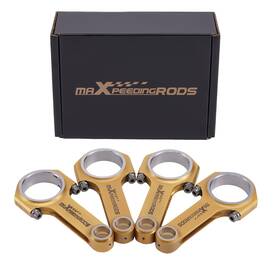
( Brand: Maxpeedingrods ), ( Manufacturer Part Number: PD2H3S ), ( Big End Diameter: 57mm/2.244 ), ( Big End Width: 19.6mm/0.772 ), ( California Prop 65 Warning: California Prop 65 Warning ), ( Center Length: 136mm/5.354 ), ( Fitment Type: Direct Replacement ), ( Hp: Around 800hp ), ( Ipn: 8 5/16 ), ( Manufacturer Warranty: 2 Years ), ( Material: Titanium ), ( Note: No Instruction Included ), ( Notice: This Is Aftermarket Replcement Part ), ( Pin Type: Bronzed Bushing Floating Pin ), ( Quantity: 4 Pieces Of H-beam Connecting Rods ), ( Small End Diameter: 22mm/0.866 ), ( Small End Width: 25.3mm/0.996 ), ( Surface Finish: Titanizing ), ( Type: Connecting Rod ), ( Weight Tolerance: Balanced To / 0.5 Gram In Set )
Review MAXPEEDINGRODS Titanizing Forged Connecting Rods Porsche 912 356 1.1l 1.6l 5.354 Inch Arp
The **Maxpeedingrods PD2H3S Titanium Nitride (Titanizing) Forged Connecting Rods** represent the pinnacle of high-performance engineering for Porsche s classic 911, 356, and 912 models, particularly those equipped with the iconic 1.1L, 1.6L, or 5.354-inch bore engines. These rods are meticulously crafted from **high-grade forged 4340 steel**, a material renowned for its exceptional strength-to-weight ratio, ensuring they deliver uncompromising durability while significantly reducing reciprocating mass compared to stock components. The **PD2H3S** designation denotes a precision-machined design optimized for the unique demands of Porsche s small-block architecture, featuring **enlarged bolt holes** for improved clamping force and **optimized rod length** to enhance rigidity and minimize flex under extreme loads. Each rod undergoes a **multi-stage forging process**, followed by **computer numerical control (CNC) milling** to achieve flawless dimensional accuracy, critical for maintaining proper rod-to-piston clearance and minimizing internal stress concentrations.
What truly sets these rods apart is the **Titanium Nitride (TiN) coating**, applied through Maxpeedingrods proprietary **Titanizing process**, which fuses a dense, wear-resistant layer of titanium nitride onto the rod s surface. This **hard anodized finish** not only enhances corrosion resistance but also imparts a **smooth, low-friction surface** that reduces wear on bearings and piston pins, extending component life and improving efficiency. The TiN coating also provides a **distinctive golden hue**, a visual testament to the rods premium quality and performance-oriented design. Beyond aesthetics, the coating s **high hardness** (measured at **2200 Vickers**) ensures superior resistance to galling and scuffing, making these rods ideal for high-RPM applications, forced induction, or aggressive tuning scenarios where stock rods would otherwise fail prematurely.
For Porsche enthusiasts seeking to unlock the full potential of their classic engines, these rods are engineered to **withstand the rigors of modern tuning** while preserving the integrity of the original engine architecture. Whether paired with **ARP main and rod studs** for maximum clamping force or integrated into a **high-performance bottom-end assembly**, the PD2H3S rods offer a **direct bolt-on upgrade** that eliminates the need for costly engine rebuilds or compromises in power delivery. Their **balanced weight distribution** and **precise machining** contribute to smoother operation, reduced vibration, and improved reliability qualities that are especially critical in high-revving applications where stock rods may succumb to fatigue or bending. Whether restoring a vintage 356 Speedster, pushing a 911 SC to its limits, or building a modernized 912 with a turbocharged or nitrous-boosted engine, these rods provide the **strength, precision, and longevity** required to handle the most demanding modifications without sacrificing performance or longevity.
In summary, the **Maxpeedingrods PD2H3S Titanium Nitride Forged Connecting Rods** are not merely an upgrade they are a **critical component upgrade** for any Porsche owner serious about extracting genuine power from their classic engine. With their **superior materials, advanced coating technology, and meticulous craftsmanship**, these rods redefine the standard for aftermarket bottom-end components, ensuring that every revolution is met with confidence, efficiency, and unmatched durability.
### **Pros and Cons of Buying Maxpeedingrods PD2H3S Titanium Forged Connecting Rods for Porsche 911/356 (1.1L, 1.6L, 5.354" ARP Bolt Pattern)**
#### **Pros**
1. **Superior Strength and Durability**
- Titanium-forged rods offer an exceptional strength-to-weight ratio, making them significantly stronger than steel rods while being lighter. This reduces reciprocating mass, improving engine balance and reducing stress on the crankshaft and bearings.
- The PD2H3S rods are designed for high-performance applications, including forced induction and high-RPM use, which is ideal for modified Porsche engines.
2. **Enhanced Engine Performance**
- Lighter rods reduce inertia, allowing for better valve overlap, improved airflow, and higher RPM potential. This can lead to better horsepower and torque, especially in naturally aspirated or turbocharged applications.
- The forged construction ensures dimensional stability under extreme loads, reducing the risk of fatigue failure compared to cast or billet rods.
3. **Compatibility with High-Performance Upgrades**
- These rods are designed to work with ARP main and rod bolts (5.354" bolt pattern), which are already a popular choice for high-performance Porsche builds. The combination of ARP bolts and Maxpeedingrods rods provides a robust foundation for aggressive modifications.
- The rods are engineered to handle high compression ratios, boost pressures, and forced induction, making them suitable for turbocharged or supercharged applications.
4. **Reduced Engine Stress**
- By reducing reciprocating mass, the rods help minimize stress on the crankshaft, bearings, and block. This can extend the life of these components and improve overall engine reliability.
- The precise machining and heat treatment of titanium-forged rods ensure they maintain integrity under extreme conditions, reducing the risk of catastrophic failure.
5. **Lightweight Advantage**
- Titanium is about 40% lighter than steel, which contributes to a more balanced engine. This can improve drivability, reduce vibration, and allow for more aggressive tuning without compromising reliability.
6. **Custom Fit and Precision**
- Maxpeedingrods rods are custom-built to fit the specific bolt pattern and engine requirements of the Porsche 911/356. This ensures a perfect fit with minimal clearance issues, which is critical for high-performance applications.
- The rods are often paired with custom gaskets and seals to ensure a leak-free installation.
---
#### **Cons**
1. **High Cost**
- Titanium-forged connecting rods are significantly more expensive than steel or billet rods. The cost can be prohibitive for budget-conscious builders, especially when factoring in additional expenses like ARP bolts, gaskets, and installation labor.
- The price point may not be justified for mild modifications or stock engines where steel rods would suffice.
2. **Specialized Installation Requirements**
- Installing titanium rods requires careful handling to avoid damage. They are more prone to scratches or dents from improper tools or handling, which could compromise their integrity.
- The installation process may require additional expertise, such as precise alignment and torque specifications, which could add to labor costs if done professionally.
3. **Limited Availability of Parts**
- While Maxpeedingrods is a reputable manufacturer, titanium rods are not as widely available as steel or billet options. This could make sourcing or finding replacement parts more difficult in the future.
- Some aftermarket components, such as pistons or crankshafts, may need to be specifically chosen to work with titanium rods, adding complexity to the build.
4. **Potential Learning Curve**
- Building an engine with titanium rods often requires a deeper understanding of engine dynamics, material properties, and high-performance tuning. This may not be feasible for DIYers without prior experience.
- The transition from steel to titanium may require adjustments in tuning parameters, such as ignition timing or fueling, to account for the altered reciprocating mass.
5. **Long-Term Reliability Concerns (Less Common but Worth Noting)**
- While titanium is highly durable, some builders report concerns about long-term fatigue or corrosion in extreme conditions (e.g., high humidity or salt exposure). However, this is rare with properly maintained engines.
- The lack of widespread use of titanium rods in Porsche applications means there is less real-world data compared to steel or billet rods, which could be a consideration for some buyers.
6. **Compatibility with Stock or Mildly Modified Engines**
- For stock or mildly modified engines, the performance gains from titanium rods may not be significant enough to justify the cost. In such cases, steel rods with ARP bolts or a high-quality billet rod set might offer a better balance of performance and affordability.
---
### **Conclusion**
Maxpeedingrods PD2H3S titanium-forged connecting rods are an excellent choice for Porsche 911/356 owners planning aggressive modifications, including forced induction, high-RPM applications, or builds targeting extreme performance. The combination of unmatched strength, reduced reciprocating mass, and compatibility with ARP bolts makes them a top-tier option for high-performance builds. However, the high cost, specialized installation requirements, and potential complexity of tuning may not be justified for stock or mildly modified engines.
For builders prioritizing reliability, performance, and longevity in a heavily modified or turbocharged Porsche engine, these rods are a strong recommendation. For those on a tighter budget or working with a stock or mildly tuned engine, a high-quality steel rod set (e.g., ARP or Eibach) or billet rods may be a more practical alternative.
### **Recommendation**
- **If you are building a high-performance, turbocharged, or heavily modified Porsche 911/356 engine (especially with ARP bolts), the Maxpeedingrods PD2H3S titanium rods are highly recommended.** The performance gains in terms of RPM potential, engine balance, and durability will be substantial.
- **If you are working with a stock or mildly modified engine, consider a high-quality steel rod set (e.g., ARP or Eibach) or billet rods** to achieve a better balance between cost and performance.
- **Ensure you have the budget for additional components** (e.g., custom pistons, crankshaft, gaskets) and the expertise to install and tune the engine properly. Consulting with a performance engine builder or tuner is advisable before committing to titanium rods.
Details:
specifications pistonrinro:
- for makes: Porsche
- brand: Maxpeedingrods
- mpn: Pd2h3s
- big end diameter: 57mm/2.244
- big end width: 19.6mm/0.772
- california prop 65 warning: California Prop 65 Warning
- center length: 136mm/5.354
- fitment type: Direct Replacement
- hp: Around 800hp
- ipn: 8 5/16
- manufacturer warranty: 2 Years
- material: Titanium
- note: No Instruction Included
- notice: This Is Aftermarket Replcement Part
- pin type: Bronzed Bushing Floating Pin
- quantity: 4 Pieces Of H-beam Connecting Rods
- small end diameter: 22mm/0.866
- small end width: 25.3mm/0.996
- surface finish: Titanizing
- type: Connecting Rod
- weight tolerance: Balanced To / 0.5 Gram In Set
general pistonrinro:
- Car Truck Parts Accessories > Engines Engine Parts > Connecting Rods Parts
- condition: New
shipping pistonrinro:
- class: Standard
- cost: $0.00
- carrier: FedEx
- type: Fixed
- service: FedEx Ground / FedEx Home Delivery
- transit: 3-8 Days
seller pistonrinro:
- city: Houston, Texas
- # reviews: 22053
- rating: 99.3%
payments pistonrinro:
- wallet: Google-pay
- credit card: Diners-club
- other
offer pistonrinro:
- started: March 9, 2026
- quantity: 2
- best offers: True
- sold: 0
- availability: In Stock
- options: Ship-to-home
returns pistonrinro:
- paid by: Seller
- policy: Returns Accepted
- time: 30 Days
Maxpeedingrods PD2H3S Is Similar To:
- Maxpeedingrods Rgo24q Titanizing Racing 4340 Connecting Rods For Toyota Auris E180 Nr 8nr-fts 1.2t (56.6% similar) 7TH, . All big and small ends are finished with sunken honing machine, - precision alignment sleeves positively locate the rod cap, maintaining end bore size eliminating cap walk, 100% x-rated, sonic tested , multi-stage heat treated, shot preened to relieve stress, come bronzed bushing suitable for...(August 12th, 2023)
- Maxpeedingrods Sl8ozy 8 Pcs En24 4340 Forged Connecting Rods Arp 8740 Bolts For Chevrolet Small Block (53.7% similar) 215,000-220,000 psi. Shot-preened finish to remove potential for stress risers, 6.HIGH precision CBC machined,precision rod cap alignment dowels, 7.BORES finished /- .01MM, 8.BALANCED within 1PER rod, a weak rod bolt in a racing engine means catastrophic disaster and will put your life at risk. Each...(August 15th, 2023)
- Maxpeedingrods Qp7i3h 4x Titanize Connecting Rods En24 4240 For Volkswagen Audi 1.4 Tsi tfsi Ea211 (56.6% similar) For Volkswagen pasta RSI 3G5, 3G2, 3C5, 3C2, 365, 362 1.4. 100% x-rated, sonic tested and . For Volkswagen for Audi 1.4 RSI/TVs EA211 engine. We established cooperation's with em tron, mote, link, cartel, him, etc. Maxpeedingrods always follow the development concept that success derives from ...(August 17th, 2023)
- Maxpeedingrods 0y7otf Connecting Rods For Nissan S13 Silvia 180sx Bluebird Sunny Ca18 Ca18de Ca18det (46% similar) The fake bolts will never last under 400HP or higher. 180,000 - 210,000 psi. It effectively avoid reload scatter phenomenon. All big and small ends are finished with sunken honing machine, - precision alignment sleeves positively locate the rod cap, maintaining end bore size eliminating cap walk, ...(August 19th, 2023)
- Maxpeedingrods P1xyc7 4pcs Connecting Rods For 4g63 2nd Gen And Lancer Evo 7 Bolt Conrod Bielle Arp 2000 (45.1% similar) Full physical. Applications. 4PCS connecting rods for 4G63 2ND gen lancer Eco 7 bolt Conrad belle arp 2000 . For 4G63 2ND gen lancer Eco 7 bolt, note to length :156MM/6.142. Will not fit 1g 4G63 6 bolt engines. Telephone number. For talon for RSI 1993 -1998, Mitsubishi eclipse gs 1993 -1994, GST...(August 28th, 2023)
- Maxpeedingrods 0i3fmy New 4340 Forged Connecting Rods Arp Bolts For Honda Civic L15b7 L15b9 Vtc Turbo (47.8% similar) For Honda L15B7 Tc turbo, 2016 for civic turbo us, Canada, china, 2017 Si Canada m Rico, Cr-v, non-LX aura CDC china, 2018 accord us Canada, please double confirm the dimensions to ensure get right parts, -, pin type: floating piston. Best costumer service. V product test and ISO 9001 ...(September 2nd, 2023)
- Maxpeedingrods 548ja0 Forged H-beam Connecting Rods Arp Bolts For Hyundai 1.6 Gamma T-gdi G4fj 130.8mm (50.5% similar) All big and small ends are finished with sunken honing machine, precision alignment sleeves positively locate the rod cap, maintaining end bore size eliminating cap walk, -100% x-rated, sonic tested , -multi-stage heat treated, shot preened to relieve stress, come bronzed bushing suitable for ...(September 2nd, 2023)
- Maxpeedingrods P1dv8l 4pcs Connecting Rods For Toyota Celica Gt-s Corolla T-sport 2zzge 2zz-ge 1.8l (49.2% similar) Best costumer service. It begins from the date purchased. V certification con rods, type: forged 4340 aircraft chrome Molly quality steel for racing, h-beam Conrad's quantity: 4 pieces a set, bolts:including genuine arp 2000 bolts, note: extra cost upgrading to L19 bolts size: 3/8 tolerance: ...(September 18th, 2023)
- Maxpeedingrods G4n3if 4340 Connecting Rod arp 2000 Bolt For Bmw 1 Series F20 2010-2018 Hatchback 120i (45.8% similar) Fastener yield psi. A weak rod bolt in a racing engine means catastrophic disaster and will put your life at risk. V product test and ISO 9001 certified, us Facebook account: . It secure the connecting rod and bearing to crankshaft. Advertised horsepower RATING:200HP/PIECE, top acceleration: ...(September 22nd, 2023)
- Maxpeedingrods P4hsed 4pcs I-beam Racing Connecting Rod For Audi S3 1.8 20vt Apy Amk 1999 2001 144mm (52% similar) 4PCS i-beam racing connecting rod for Audi s3 1.8 20VT pay amok 1999 2001 144MM. Application, note: please double confirm the dimensions before purchasing, no tapered small end, for Audi / VW golf GTI 1.8T 2.0L 16V 20V 4 Cl. Advertised horsepower RATING:200HP/PIECE, top acceleration: 9000RPM, ...(September 23rd, 2023)
- Maxpeedingrods Quej2s Forged Connecting Rod And Arp Bolts For Volvo 850 C70 T5 2.3l B5234t Conrod 800hp (54.2% similar) Fastener yield psi. A weak rod bolt in a racing engine means catastrophic disaster and will put your life at risk. us Facebook account: . We care about your engine as much you do. Shot-preened finish to remove potential for stress risers, 6.HIGH precision CBC machined,precision rod cap alignment ...(September 24th, 2023)