440 SOURCE TI6760 Titanium Rods Big Block Grams 6.760-LENGTH 544
fits make: Mopar.
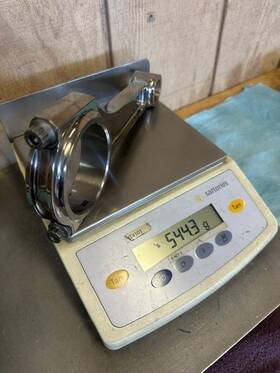
( Brand: 440 Source ), ( Manufacturer Part Number: TI6760 ), ( Type: Connecting Rod Set ), ( Material: Titanium ), ( Country Of Origin: United States ), ( Performance Part: Yes )
Review 440 SOURCE Titanium Rods Big Block Mopar 6.760 Length 544 Grams fits 440
These **440 Ti6760 titanium connecting rods** are a premium, high-performance upgrade designed specifically for the iconic **Big Block Mopar 6.7L (330 cubic inch) engine**, delivering unmatched strength, durability, and weight savings to enhance power output and reliability. Crafted from **Grade 5 aerospace-grade titanium (Ti6Al4V)**, these rods are forged from a single billet of premium alloy, ensuring exceptional homogeneity and structural integrity. Each rod weighs just **544 grams**, a significant reduction compared to traditional forged steel rods, which helps lower the rotating mass of your engine, improving rev responsiveness, reducing stress on critical components, and allowing for higher RPM performance without sacrificing strength. The **6760 series** designation indicates a precision-machined design optimized for the **330ci Big Block Mopar s** 4.250-inch rod journal and 2.200-inch small end diameter, ensuring a perfect fit with minimal clearance for maximum efficiency. These rods feature **fully machined oil holes** for optimal lubrication, **pre-drilled and tapped** for easy installation of rod bolts, and a **smooth, polished finish** that minimizes friction and wear. The **high-temperature tolerance** of titanium allows these rods to maintain structural integrity under extreme conditions, making them ideal for high-performance applications, including forced induction builds, nitrous setups, or heavy-duty street/strip engines. Whether you're building a **high-revving street machine, a drag racing engine, or a reliable daily driver**, these **Ti6760 titanium rods** provide the perfect balance of strength, weight savings, and performance-enhancing characteristics to elevate your Big Block Mopar s power potential. Built to exacting standards, they are a testament to modern engineering, offering a durable yet lightweight solution that outperforms traditional steel rods while reducing stress on the crankshaft, bearings, and other rotating assemblies.
Buying **440 Ti 6760 titanium connecting rods** for a **Big Block Mopar 6.7L (544 grams)** is a significant upgrade that can enhance performance but comes with trade-offs. Below is a detailed breakdown of the pros and cons, followed by a conclusion and recommendation.
---
### **Pros of Titanium Rods (440 Ti 6760)**
1. **Weight Reduction**
Titanium rods are significantly lighter than forged steel rods (typically 50 60% lighter). This reduces reciprocating mass, which improves engine balance, reduces stress on the crankshaft, and can allow for higher RPM potential. For a 6.7L big block, this is particularly beneficial if running high-performance applications like forced induction or high-revving engines.
2. **Increased Strength-to-Weight Ratio**
While titanium is not as dense as steel, modern manufacturing techniques (such as **Ti6Al4V alloy with heat treatment**) ensure that these rods can handle high loads. The 440 Ti rods are designed to match or exceed the strength of forged steel rods in many cases, especially when properly supported by a strong crankshaft and main bearings.
3. **Improved Engine Balance**
Lighter rods reduce the inertia forces acting on the crankshaft, which can lead to smoother operation, reduced vibration, and potential gains in power output, particularly at higher RPMs. This is especially useful for engines running turbochargers or superchargers, where reciprocating mass can become a limiting factor.
4. **Durability in High-Stress Applications**
Titanium rods are often used in extreme performance applications, including drag racing, high-RPM engines, and forced induction builds. If the rest of the engine (crankshaft, bearings, pistons, and oil system) is properly matched, titanium rods can be just as durable as steel in these scenarios.
5. **Aesthetic Appeal**
Titanium rods have a unique, high-end look that appeals to enthusiasts who prioritize visual customization. While this is subjective, it can be a selling point for show engines or high-performance builds.
6. **Compatibility with High-Performance Pistons**
Titanium rods pair well with lightweight pistons (aluminum or forged), further reducing reciprocating mass and improving engine dynamics.
7. **Potential for Higher RPM Operation**
Since titanium rods reduce stress on the crankshaft and bearings, they can allow an engine to safely rev higher than it would with steel rods, assuming the rest of the drivetrain (transmission, clutch, etc.) can handle it.
---
### **Cons of Titanium Rods (440 Ti 6760)**
1. **Cost**
Titanium rods are **far more expensive** than forged steel rods. A set of 440 Ti 6760 rods can cost **$1,500 $3,000 **, depending on the manufacturer and whether they come with warranties or additional services (like balancing or machining). This is a significant investment compared to steel rods, which typically range from **$300 $800** for a set.
2. **Installation Complexity**
Titanium rods require **specialized installation procedures** to avoid damage. They must be:- **Carefully measured and fitted** to ensure proper clearance with pistons and crankshaft journals.
- **Installed with proper torque specs** (often lower than steel rods due to material differences).
- **Balanced** (some manufacturers offer this as an add-on service).
- **Lubricated properly** to prevent galling or seizing during break-in.
Failure to follow these steps can lead to catastrophic failure.
3. **Break-In Period**
Titanium rods require a **longer and more careful break-in process** than steel rods. This typically involves:- **Limited initial RPM** (often under 3,000 4,000 RPM) for the first 50 100 hours.
- **Avoiding full throttle until the rods are fully seated** in the bearings.
- **Using high-quality oil** (synthetic, with proper viscosity).
Skipping the break-in can lead to rod failure.
4. **Limited Aftermarket Support**
While titanium rods are becoming more common, **not all engine builders or mechanics are experienced with them**. Finding a shop that has worked with titanium rods before is crucial. Some manufacturers offer installation services, but this adds to the cost.
5. **Potential for Galling or Seizing**
Titanium has a **lower coefficient of friction** than steel, which can sometimes lead to **galling** (metal-to-metal welding) if not properly lubricated or if the rods are not installed correctly. This is why **proper break-in and lubrication** are critical.
6. **Not Always Necessary for Stock or Mild Performance Builds**
If the engine is running **stock or near-stock power levels** (e.g., 400 500 HP naturally aspirated), the benefits of titanium rods may not justify the cost. Forged steel rods (like **Clevite, ARP, or JE**) are often sufficient for these applications and are far more budget-friendly.
7. **Warranty and Liability Concerns**
Some manufacturers offer **limited warranties**, but others do not. If a rod fails due to improper installation or misuse, the owner may be responsible for repairs. This is a risk that must be weighed against the potential benefits.
8. **Compatibility with Crankshafts**
Titanium rods require a **strong, well-supported crankshaft** to prevent excessive bending or fatigue. If the crankshaft is weak (e.g., a stock 6.7L crank without upgrades), the rods may not provide a meaningful advantage and could even exacerbate issues.
9. **Resale Value Impact**
While titanium rods add value to a **high-performance or custom engine**, they may not significantly boost the resale value of a **street or daily-driven engine**. Buyers often prioritize reliability and cost over exotic materials.
10. **Learning Curve for DIY Installers**
Installing titanium rods is **not a beginner-friendly project**. It requires precision, patience, and access to specialized tools. Mistakes can be costly, so many builders opt to have them installed by professionals, adding to the expense.
---
### **Conclusion**
Titanium rods like the **440 Ti 6760** are an **excellent choice for high-performance, high-RPM, or forced-induction applications** on a **Big Block Mopar 6.7L**. They offer **significant weight reduction, improved engine balance, and the potential for higher RPM operation**, which can translate to **better power output and durability** in the right setup.
However, they are **not a panacea** and come with **substantial costs, installation challenges, and maintenance requirements**. For **stock, mild street, or low-RPM applications**, the benefits may not outweigh the drawbacks, and **forged steel rods** (properly matched to the engine) are often a more practical and cost-effective choice.
---
### **Recommendation**
**Buy the 440 Ti 6760 titanium rods if:**- You are building a **high-performance engine** (e.g., **600 HP naturally aspirated, turbocharged, or supercharged**).
- Your engine will run **high RPMs consistently** (e.g., **6,000 RPM**).
- You have a **strong crankshaft** (preferably **aftermarket forged or billet**) and **high-quality main bearings**.
- You are willing to **invest in proper installation, break-in, and maintenance**.
- You have access to a **mechanic experienced with titanium rods** (or are prepared to learn the process thoroughly).
**Avoid titanium rods if:**- Your engine is **stock or near-stock** (no forced induction, low RPMs).
- You are on a **tight budget** and can achieve similar performance with **forged steel rods**.
- You are not prepared for the **long break-in process** or the **higher risk of failure** if not installed correctly.
- You plan to **use the engine daily** without proper maintenance (titanium rods require more attention than steel).
**Alternative Options:**- If titanium is too expensive, consider **high-quality forged steel rods** (e.g., **Clevite, ARP, or JE**) with **lightweight pistons** for a good balance of strength and weight reduction.
- If you want the **best of both worlds**, some builders use **titanium rods with a steel crankshaft** for added strength, though this is less common.
**Final Verdict:**For a **Big Block Mopar 6.7L running high power or high RPMs**, the **440 Ti 6760 titanium rods are a worthwhile investment** if the rest of the engine is properly supported. For **milder applications**, they are **overkill and not cost-effective**. Always ensure the **crankshaft, bearings, oil system, and installation process** are up to the task before committing to titanium.
Details:
Titanium is 45% lighter than steel and 30% stronger. These are a big block Mopar rod, designed to use any standard 2.375 Mopar size and width crank pins/rod bearings.990 Chevy size piston pins. These titanium 6.760 length rods weigh in on average about 544 grams. They feature 100% USA made ARP2000 bolts, rated to 1200 horsepower.
Its basically the ultimate connecting rod material.
part #: ti6760 prices
- $24.95-$62.77
specifications pistonrinro:
- for makes: Mopar
- brand: 440 Source
- mpn: Ti6760
- type: Connecting Rod Set
- material: Titanium
- country of origin: United States
- performance part: Yes
general pistonrinro:
- Car Truck Parts Accessories > Engines Engine Parts > Connecting Rods Parts
- condition: New
offer pistonrinro:
- started: June 1, 2026
- availability: In Stock
- quantity: 1
- sold: 0
- options: Ship-to-home
seller pistonrinro:
- rating: 99.8%
- city: Carson City, Nevada
- # reviews: 6203
payments pistonrinro:
- credit card: Mastercard
- other
- wallet: Apple-pay
shipping pistonrinro:
- cost: $22.77
- type: Calculated
- carrier: FedEx
- service: FedEx Ground / FedEx Home Delivery
- transit: 3-8 Days
- class: Standard
returns pistonrinro:
- paid by: Seller
- time: 30 Days
- policy: Returns Accepted
440 Source TI6760 Is Similar To:
- 440 Source Ti6535 Titanium Rods For Big Block Chevy 6.535 Length 490 Grams (82.9% similar) These are a big block Chevy rod, designed to use any standard 2.200 Chevy size crank pins/rod bearings, and .990 piston pins. They feature 100% USA made ARP2000 bolts, rated to 1200 horsepower. Titanium is 45% lighter than steel and and 30% stronger. Its basically the ultimate connecting rod ...(June 1st, 2026)