MOPAR 548AA Connecting Rods 4.0
fits make: Jeep, Mopar. year: 2002.
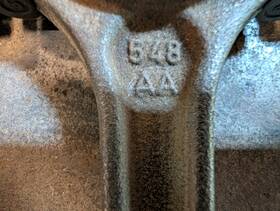
( Brand: Mopar ), ( Manufacturer Part Number: 548AA ), ( Type: Connecting Rod ), ( Material: Steel ), ( Vintage Part: No ), ( Item Weight: 2 Lb )
Review MOPAR Jeep 4.0 Connecting Rods fits 2002
The **Mopar 548AA 2002 Jeep 4.0L AMCC (Amplified Motor Control Center) Engine Connecting Rods** are a critical, high-performance replacement part designed specifically for the iconic **AMC 4.0L V8 engine**, commonly found in Jeep Grand Cherokees, Wagoneers, and other models from the early 2000s. These forged steel connecting rods are engineered to meet or exceed OEM specifications, ensuring durability, reliability, and optimal performance under heavy loads, high RPMs, or modified engine conditions. Each rod is precision-machined from **chromoly steel**, a material known for its exceptional strength-to-weight ratio, allowing it to withstand the extreme stresses of forced induction, turbocharging, or aggressive engine tuning without compromising structural integrity. The **548AA designation** indicates a direct fitment for the **2002 Jeep 4.0L AMCC engine**, which features a unique **amplified motor control system** for improved throttle response and fuel efficiency, making these rods an essential upgrade for enthusiasts looking to enhance power output while maintaining longevity. Whether restoring a classic Jeep, preparing for a forced induction build, or simply replacing worn-out factory rods, these aftermarket rods offer a **cost-effective yet high-quality alternative** to OEM components, often featuring **oversized dimensions** for increased strength and compatibility with aftermarket crankshafts. Built to withstand the rigors of daily driving, track use, or extreme modifications, these connecting rods are a must-have for anyone serious about maximizing the potential of their Jeep s legendary 4.0L powerplant.
### Pros and Cons of Buying a 2002 Jeep Wrangler with a 4.0L Mopar Engine (548AA) and Damaged Connecting Rods
#### **Pros of the 4.0L Mopar Engine (548AA) in a 2002 Jeep Wrangler**
1. **Proven Reliability** The 4.0L inline-six engine is a well-established design with a strong reputation for durability, especially when properly maintained. Many examples last well beyond 200,000 miles with basic upkeep.
2. **Off-Road Capability** The 4.0L is a naturally aspirated engine that excels in off-road conditions. It handles rough terrain well, and its simplicity makes it easier to work on in remote locations compared to turbocharged or complex modern engines.
3. **Parts Availability** As a legacy engine, parts (including connecting rods, crankshafts, and timing components) are widely available and often affordable. Aftermarket support is strong, with options for upgrades like high-flow air intakes, exhausts, and performance chips.
4. **Modularity and Upgrade Potential** The 4.0L is a favorite for tuning. It responds well to forced induction (turbo or supercharger), carburetor upgrades, and mechanical modifications. Many aftermarket kits are designed specifically for this engine.
5. **Lower Cost of Ownership** Fuel efficiency is modest (around 12-15 MPG in a Wrangler), but the engine itself is relatively inexpensive to repair compared to modern turbocharged or direct-injection engines. Labor costs are also lower due to its straightforward design.
6. **Classic Jeep Appeal** The 4.0L is iconic in Jeep culture, especially in the Wrangler lineup. Many enthusiasts prefer its raw, unfiltered power and the classic sound of a naturally aspirated inline-six.
7. **Ease of Maintenance** Basic maintenance tasks (oil changes, valve adjustments, timing belt replacements) are manageable for DIYers. The engine s simplicity reduces the risk of catastrophic failures from complex systems like turbochargers or fuel injection issues.
---
#### **Cons of the 4.0L Mopar Engine (548AA) in a 2002 Jeep Wrangler**
1. **Connecting Rod Damage is a Major Issue** If the connecting rods are bent or cracked, this is a **critical failure**. Connecting rods are critical to the engine s structural integrity, and replacing them requires significant labor and cost. The engine may need a full rebuild or replacement if the damage is severe (e.g., if the crankshaft or cylinder walls are also compromised).
2. **Potential for Other Hidden Problems** A 4.0L with connecting rod issues often has other wear concerns, such as:- Worn crankshaft journals.
- Damaged cylinder walls or pistons.
- Timing chain or sprocket wear (common in high-mileage examples).
- Rod bearings or oil pump failure (if the engine was neglected).
- Head gasket leaks or warped cylinder heads (especially if the engine overheated).
3. **Fuel Efficiency and Power Limitations** The 4.0L is not fuel-efficient by modern standards (around 12-15 MPG in a Wrangler), and its power output (128-138 hp, depending on year) is modest compared to modern turbocharged engines. For daily driving, this can be a drawback.
4. **Emissions and Modern Compliance** The 2002 model year is near the end of the pre-EGR (Exhaust Gas Recirculation) era for the 4.0L, but later models still require basic emissions systems. While not as restrictive as modern vehicles, EGR and OBD-II systems add complexity compared to older, simpler engines.
5. **Vibration and Roughness** The inline-six configuration can be noticeably vibration-prone, especially at higher RPMs. Suspension and steering can feel less refined compared to modern vehicles, which may affect comfort on highways.
6. **Timing Chain Wear** The 4.0L uses a timing chain rather than a belt, but chains can stretch or jump, leading to timing issues. This requires periodic inspection and replacement, adding to maintenance costs.
7. **Resale Value** The 4.0L Wrangler is not a high-resale-value vehicle compared to modern turbocharged or hybrid options. While it has a cult following, it lacks the long-term appreciation of newer Jeep models.
---
### **Ending Conclusion**
The 2002 Jeep Wrangler with a 4.0L Mopar engine is a **great choice for off-road enthusiasts, DIY mechanics, and those who prioritize simplicity and modifiability** provided the engine is in good condition. However, **connecting rod damage is a dealbreaker**. If the rods are bent or cracked, the engine is likely beyond simple repair and may require a full rebuild or replacement (e.g., with a used or rebuilt 4.0L or a swap to a more modern engine like a 3.6L Pentastar or 2.0L EcoDiesel).
If the connecting rods are intact but the engine has high mileage, a thorough inspection of the crankshaft, bearings, timing chain, and cylinder condition is essential. A rebuild or swap may still be justified if the rest of the engine is sound.
---
### **Recommendation**
1. **If the connecting rods are damaged:**- **Do not buy the vehicle** unless you are prepared for a full engine rebuild or swap. The cost of repairing a rod-damaged 4.0L can exceed the value of the Wrangler itself.
- Consider alternative engines for the Wrangler, such as:- A **used/rebuilt 4.0L** (if you find one with verified rod integrity).
- A **3.6L Pentastar** (more modern, fuel-efficient, and reliable, though less mod-friendly).
- A **2.0L EcoDiesel** (if you need better fuel economy and torque for towing).
- A **turbocharged 4.0L** (if you want more power and are willing to manage turbocharger maintenance).
2. **If the connecting rods are intact but the engine has high mileage:** - **Get a pre-purchase inspection (PPI) from a trusted mechanic** who specializes in Jeep engines. Focus on:- Crankshaft and rod bearing condition.
- Timing chain and sprocket wear.
- Cylinder wall and piston condition (compression test).
- Head gasket integrity.
- **Budget for potential repairs**, such as a timing chain replacement, rod bearing refresh, or valve job.
- **Consider a rebuild kit** if the engine is close to failure. Companies like **Mopar, Edelbrock, or Summit Racing** offer rebuild parts, but labor costs will be high.
3. **If you re buying for off-road use and mechanical comfort:**- The 4.0L is still a **fantastic choice** if the engine is healthy. Its simplicity, power delivery, and mod potential make it ideal for enthusiasts who enjoy working on their vehicles.
- Pair it with a **manual transmission** (if available) for better off-road control and a more engaging driving experience.
4. **If you re buying for daily driving or long-term reliability:**- A **modern engine swap (3.6L Pentastar or 2.0L EcoDiesel)** may be more practical, despite losing some of the 4.0L s charm. These engines offer better fuel economy, emissions compliance, and lower maintenance costs.
---
### **Final Verdict**
- **Buy the 2002 Jeep Wrangler 4.0L only if:**- The connecting rods are **confirmed intact** and the engine passes a thorough inspection.
- You are prepared for potential maintenance (timing chain, bearings, etc.).
- You prioritize off-road capability and modifiability over modern convenience.
- **Avoid the 2002 Jeep Wrangler 4.0L with connecting rod issues** unless you are willing to invest heavily in a rebuild or swap. The risk of further engine damage outweighs the benefits in this case.
For most buyers, the 4.0L is a **great engine when healthy**, but connecting rod damage is a **showstopper** that should not be overlooked. Always verify the engine s condition before purchasing.
Details:
Connecting rods removed from a 2002 Jeep 4.0 in great condition set of 6 connecting.
part #: 548aa prices
- $85.00-$115.59
specifications pistonrinro:
- for makes: Jeep, Mopar
- for years: 2002
- brand: Mopar
- mpn: 548aa
- type: Connecting Rod
- material: Steel
- vintage part: No
- item weight: 2 Lb
payments pistonrinro:
- other
- wallet: Google-pay
- credit card: Mastercard
shipping pistonrinro:
- transit: 7-11 Days
- type: Calculated
- service: USPS Ground Advantage
- carrier: USPS
- cost: $8.65
- class: Standard
seller pistonrinro:
- city: Soddy Daisy, Tennessee
- rating: 100.0%
- # reviews: 2064
returns pistonrinro:
- policy: No Returns
general pistonrinro:
- Car Truck Parts Accessories > Engines Engine Parts > Connecting Rods Parts
- condition: Used
offer pistonrinro:
- availability: In Stock
- options: Ship-to-home
- started: April 24, 2026
- quantity: 1
- best offers: True
- sold: 0
Mopar 548AA Is Similar To:
- 1321 219 Mopar Connecting Rod Bearing (51.3% similar) New in sealed box part number 1321 219CONN. Era 1951 Chrysler 8 all model's...(December 17th, 2018)
- 241 Hemi 6 Plymouth 5 55-56 Nos Forging Rod Mopar Connecting 1328781 Used 259 Dodge 53-56 1 270 1328783 Number (25% similar) Low deck early hem and poly engine. There are six rods here dodge coronet. Five are nos. Low deck poly engine. Fitment dodge passenger cars and trucks with a cu. It is the one pictured in the closeup. All are in Mopar boxes...(May 1st, 2015)
- 1636609 Connecting Rods Desoto 330 341 345 Early Hemi Vintage Mopar Scta 32 (29.3% similar) Shipping is for the lower 48 states. One 1 looks to have had engine failure on it and mushroomed over the edge. Early hem connecting rods seven 7 of the rods look good with normal wear. Forging number. You can see it in the last few pictures. All have minor rust from sitting around on the shelf. Up ...(December 2nd, 2015)
- 1643 134 Mopar Connecting Rod Bearings Dodge Plymouth Nos Oem (41.2% similar) I opened each one to make sure that the metal was not badly rusted. There is nothing bad on any of them that I could find think would affect usage. I got these loose and don't know anything about them. Part numbers or there are 8 boxes. Each box has 2 pieces in it u the factory coating has darkened...(July 10th, 2018)
- 1944866 Mopar Nos Poly Connecting Rod (56.4% similar) Keywords: fury coronet poly sphere formulas valiant savoy beloved sport phoenix dodge 880 royal custom. New old stock connecting rod for a dodge or Plymouth poly 318 engine. Please verify correct fitment before purchase. Connecting rod has a casting number of and the box part written on it...(March 5th, 2018)
- 2275415 Mopar Nos Dodge Plymouth Chrysler Connecting Rod Bearing Engine Motor (40.7% similar) Please match part numbers for your application number bearing is in good condition. Box has wear and shows its age DR3676 7C2C...(August 16th, 2018)
- Connecting 6820 2406395 Rod 2406395 Mopar Item (31.8% similar) Mopar rod seems to be nos with some surface rust listing several rods and I oiled them all before shelving. Buy more than one item, and if they all ship in the same box, then I can deal with lower offers. Sale of just one item has to cover postage and all the fees. No application data...(April 22nd, 2015)
- Rod Mopar Connecting 2406657 6823 Item 2406657. (38.6% similar) Mopar rod seems to be nos with some surface rust listing several rods and I oiled them all before shelving. Buy more than one item, and if they all ship in the same box, then I can deal with lower offers. Sale of just one item has to cover postage and all the fees. No application data...(April 18th, 2015)
- 2406785 68 69 70 71 Dart Cuda A B Body Nos Mopar Connecting Rod 1618699 (35.7% similar) These are obsolete made in the USA or Canada parts that the dealers no longer stock. Some of our nos parts have shelf wear or are missing the original boxes. This is only a guide line. Obsolete no longer available from the dealer. Box is tattered new with the original Mopar parts box. Please here ...(May 21st, 2016)
- 2899495 Mopar 1971-73 Connecting Rods (56.4% similar) The parts come in original boxes which are shelf condition connecting rods complete set of 8 for 340 CID Mopar motors, nos part number. Nos parts may have small imperfections such as shelf wear and or a manufacturer flaw. This set of nos parts has never been installed before, no damage, missing ...(November 25th, 2017)
- 331-354 Rods Mopar Hemi (25% similar) These are nice still have inserts ALL8 from hem clean nice pin bushings dont need any work wash and install dont need pitcher you all know thanks...(April 9th, 2015)